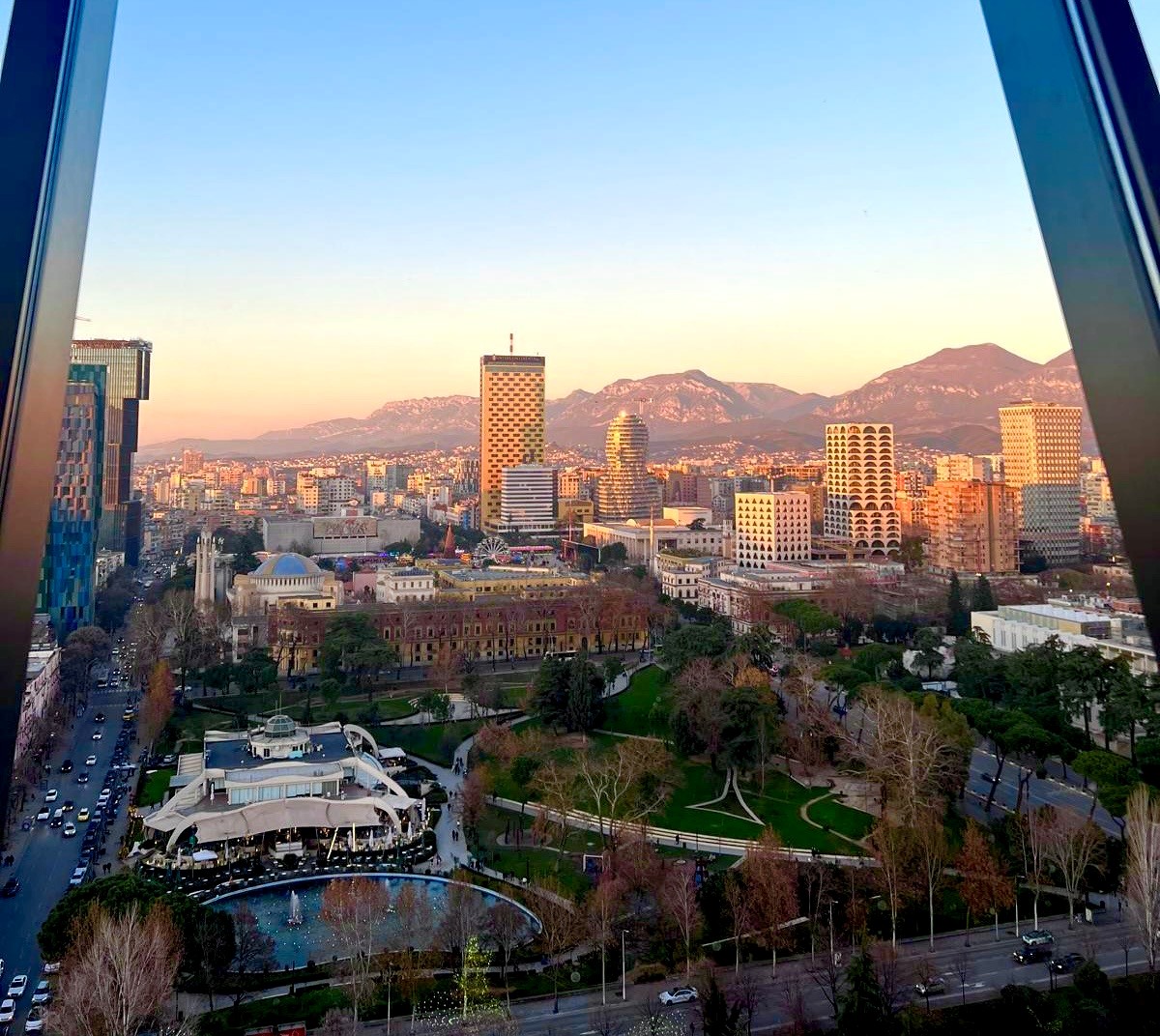
Albania enters the late 2020s at a pivotal moment in its economic journey. Having moved past the challenges of its transition years, it has emerged as one of the most dynamic economies in the Western Balkans. A strong economic record in recent years has reinforced confidence in the country’s future and strengthened its ambition to join the European Union by 2030.
Yet, just as this success story appears to be gaining momentum, recent domestic unrest – referred to as the “Flamingo Revolution” – has disrupted the narrative, raising deeper questions. Is this an isolated event, or a sign of deeper economic challenges? Could it be an early warning that Albania’s growth path might be more fragile than it appears?
A Decade of Economic Progress
Over the past decade, Albania’s economy has enjoyed strong growth and increasing stability. The economy is now almost 50% larger than it was ten years ago.
Growth accelerated in the post-Covid-19 period, averaging around 5% per year, firmly placing the country among Europe’s stronger performers. This expansion has been supported by improving macroeconomic fundamentals, including low inflation, declining public debt, and improving employment levels.
GDP Evolution in Albania (Constant Terms)

Data Source: World Bank, 2026
Beyond these headline indicators, however, a deeper transformation has been underway, reshaping the structure of the Albanian economy. Services and construction have emerged as the main drivers of economic activity, with tourism playing a central role in this shift.
Once overlooked, Albania is now firmly on the global map as a must-visit destination. International media coverage, rising visibility in travel rankings, and strong word-of-mouth have propelled the country into the spotlight. The UN World Tourism Organisation has ranked Albania among the fastest-growing tourism destinations globally. Visitor numbers are surging, turning tourism into a powerful engine of growth that is driving investment, supporting job creation, and reshaping the economy. This transformation is reflected in the figures: tourism revenues reached the equivalent of almost one-quarter of the country’s GDP (World Bank, 2026).
Beyond the Headline Numbers
While the strength of tourism has driven growth, it also highlights a broader feature of the economy: its relatively narrow base. Tourism has become Albania’s largest export sector, with spending by foreign visitors generating more than half of the country’s export revenues – a concentration that can carry significant risks.
When growth relies heavily on a single sector, it becomes more exposed to external shocks. A slowdown in global travel, economic uncertainty, or geopolitical tensions can quickly reduce visitor numbers – and with them, an important source of national income. Put simply, a large share of the country’s income depends on tourists choosing Albania each year.
Tourism Trends and Economic Contribution

Data Sources: World Bank, 2026; INSTAT; Bank of Albania
The limited diversification of the economy is also reflected in the structure of the private sector. The economy is dominated by very small firms, which make up almost all businesses and employ the vast majority of workers. While essential for job creation, many lack the scale to grow, access finance, innovate, and compete internationally, holding back productivity growth and limiting the economy’s ability to generate higher-value activities and strengthen long-term growth prospects.
These structural challenges have broader implications. While Albania has made significant progress in raising incomes over the past decade, living standards remain relatively low. Purchasing power is only around 40% of the EU average and remains low by regional standards.
At the same time, the benefits of growth have not been felt equally across society. Many Albanians continue to face limited economic opportunities and shortcomings in public services, while poverty remains persistent, with one in four people still living below the national poverty line. These underscore the gap between headline growth and everyday economic reality.
Growth and Governance: A Fragile Balance
Beyond the country’s economic development, recent unrest points to a deeper issue: the relationship between growth, institutions, and public trust. Strong macroeconomic performance does not automatically translate into confidence in economic and political systems. Perceptions of unequal opportunity, governance shortcomings, and institutional weaknesses can erode trust, even in a growing economy.
Albania’s outward migration remains among the highest in Europe, particularly among young and skilled workers. More strikingly, despite robust economic growth, population decline has accelerated in recent years, even exceeding the pace observed during the post-1990s wave of emigration that followed the fall of communism in the country.
This trend suggests that economic progress alone may not be sufficient to retain talent and foster confidence in future opportunities. While incomes have risen steadily over time, many continue to look abroad for better prospects, highlighting the challenge of translating economic growth into inclusive development.
Governance indicators point to continuing institutional weaknesses. Although progress has been made, shortcomings in the rule of law, perceived corruption, and public-sector effectiveness continue to weigh on public confidence. Albania generally performs below regional peers such as Serbia and Montenegro, and remains well below EU averages.
Concerns are particularly evident in the management of large investment projects. Decision-making around major investment projects is often characterised by limited transparency and wide discretionary powers, increasing the risk of inefficient resource allocation and undermining trust in public institutions.
These concerns are reflected in Transparency International’s Corruption Perceptions Index (CPI), which ranks countries according to perceived levels of public-sector corruption. Albania ranks in the lower half of countries globally, with the latest assessment showing a decline in its ranking, highlighting persistent challenges in strengthening governance and institutional credibility.
From Momentum to Transformation
In this context, the “Flamingo Revolution” may be less an isolated episode than a signal, highlighting the tensions that can emerge when economic progress outpaces institutional and social development. Growth alone has not been enough to ensure resilience or address underlying imbalances.
Albania’s growth model has delivered a decade of steady expansion, but its limitations are becoming increasingly apparent. While tourism and construction have been important drivers of growth, slower progress in higher-value sectors has limited economic diversification and constrained productivity gains.
The challenge ahead is not simply to sustain growth, but to improve its quality. This will require a shift towards a more diversified, productive, and competitive economy, supported by stronger institutions and more inclusive opportunities.
Albania’s growth story is real, but it remains unfinished. The next phase of development will depend on the country’s ability to convert economic momentum into lasting and broad-based prosperity.