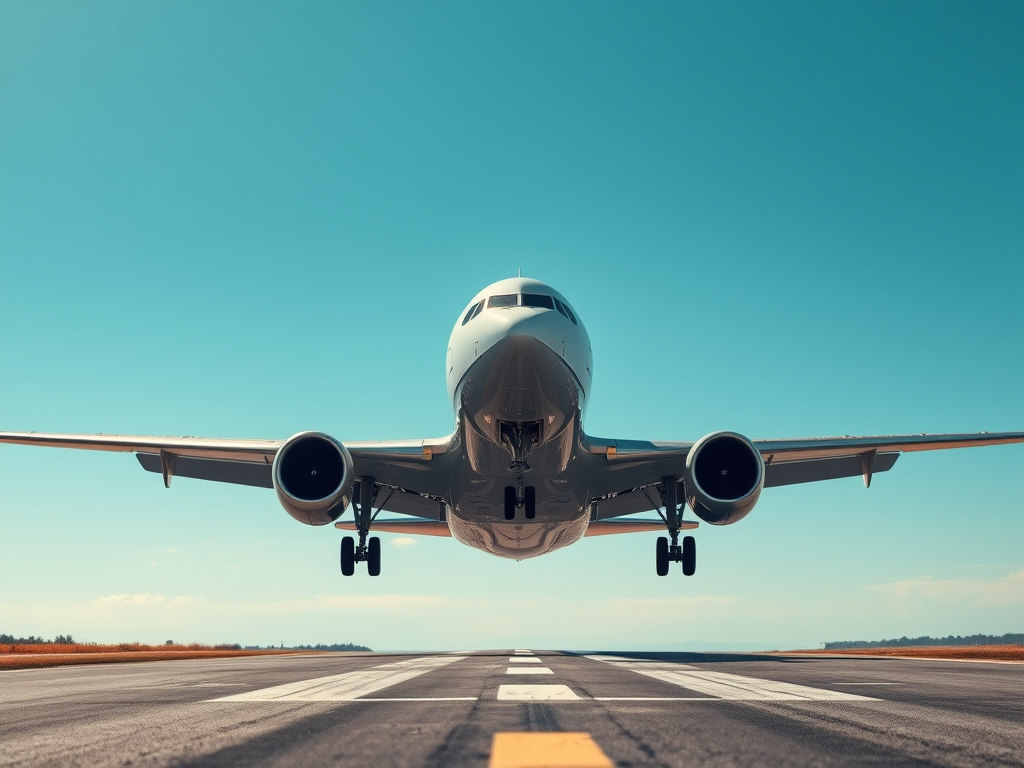
Air travel, once a luxury of the few, has become a global norm. In just a few decades, what was a modest, jet-fueled revolution has evolved into one of the world’s most powerful industries, connecting continents, supporting the massive engine of global tourism and fueling economies.
But it has also become a growing environmental burden. Today, aviation accounts for roughly 2-3% of global CO₂ emissions. While the number may seem small, in the context of global net-zero goals, it is a figure that requires attention, especially as air travel is projected to double by 2050 (Airports Council International, 2025).
An Old Concept under New Strain
The aviation industry’s shift toward sustainability is not a recent development. Its roots stretch back decades, particularly to the aftermath of the 1973 oil crisis, when skyrocketing fuel prices forced the industry to rethink efficiency. That crisis sparked a wave of innovation, with technological advances that still define modern aviation today.
One of the most significant early steps was the introduction of the widebody Boeing 747 aircraft in 1970. It revolutionised air travel by enabling airlines to transport more passengers per flight, effectively reducing fuel consumption per seat mile – a concept that would become a cornerstone of sustainable aviation.
Over the following two decades, global regulators began integrating environmental goals into policy. The International Civil Aviation Organisation (ICAO) took the lead and, in 1997, established the Committee on Aviation Environmental Protection (CAEP) to set international standards for aircraft emissions and noise. These early frameworks laid the foundation for the far more ambitious climate commitments we see today.
Fast forward to 2020, the International Air Transport Association (IATA) announced a bold commitment to achieve net-zero carbon emissions by 2050. For decades, the industry’s top priority was safety, but now, environmental impact has become the dominant concern, with sustainability becoming an essential component of airlines’ agendas.
Jet Fuel’s Green Future
In the race to cut emissions, Sustainable Aviation Fuel (SAF) has emerged as a clear frontrunner. Made from waste oils, municipal trash, or even carbon captured from the atmosphere, SAF has the potential to reduce life-cycle emissions by up to 80%. Designed as a drop-in fuel, it can be blended into existing airport fuel infrastructure and is fully compatible with modern aircraft, making it a practical and scalable solution.
The journey of SAF began with Virgin Atlantic’s pioneering biofuel flight in 2008, one of the first commercial-scale demonstrations of sustainable aviation fuels. In 2023, the same airline achieved a symbolic milestone by flying from London to New York powered entirely by 100% SAF. Meanwhile, European carriers like KLM and Lufthansa have already integrated SAF-powered routes into their operations, actively pushing for increased production and adoption. Supporting this momentum, the European Union’s ReFuelEU Aviation policy has set clear mandates: a 2% SAF blend by 2025, increasing to 70% by 2050.
Middle Eastern and Asian carriers are also moving quickly. Emirates and Etihad have been exploring local production of SAF by leveraging the Middle East’s abundant solar energy and waste resources, aiming to establish a homegrown supply. Singapore Airlines has also incorporated SAF into its comprehensive emissions strategy, complementing it with carbon offsetting programs to further reduce its environmental impact.
Despite strong interest in SAF’s potential, progress has remained slow. It currently supplies just 0.3% of global jet fuel demand, with high costs – between three and ten times more than traditional kerosene, depending on technology and geography – being a major factor. This cost burden can be unsustainable without government support, especially since fuel accounts for 30-35% of airlines’ operating expenses. Any rapid scaling will require bold investment and robust policy frameworks.
Cutting Emissions the Old-Fashioned Way
Beyond switching to cleaner fuels, airlines have been modernising their fleets – a slower but significant step in reducing aviation’s carbon footprint. New-generation aircraft like the Boeing 787 Dreamliner and Airbus A350 are 20-25% more fuel-efficient than their predecessors. Leading carriers such as British Airways, Delta, and Etihad have invested heavily in these jets, retiring older models to cut emissions and noise pollution.
However, fleet renewal is costly and can take decades to complete, making optimisation of flight operations equally imperative. Measures such as continuous descent approaches, AI-driven route optimisation, and reducing taxi times – while individually incremental – collectively can yield substantial fuel and emissions reductions when scaled across millions of flights.
The Long Game in Aviation Sustainability
Looking ahead, electric and hydrogen-powered aircraft can hold promise for significantly reducing aviation emissions; but they seem to be years, if not decades, away from widespread use. Electric planes are expected to become viable for short-haul flights by the 2030s, while hydrogen faces significant hurdles – especially for long-haul journeys – due to challenges with energy density, infrastructure, and safety standards. Nonetheless, investment is accelerating, with airlines like EasyJet, British Airways, and Qantas actively funding research and partnering with startups to push zero-emission aircraft closer to reality.
Yet, sustainability in aviation extends beyond just fuel and emissions. The industry’s environmental footprint also includes waste generated onboard and on the ground – from single-use plastics and packaging to leftover food. Airlines have been increasingly addressing these issues: British Airways has eliminated plastic straws and stirrers, JetBlue focuses on sustainable food sourcing, and Emirates is piloting innovative waste reduction and sustainable materials programs.
In addition to operational changes and waste reduction, carbon offsetting has become a widely adopted tool in aviation’s climate strategy. Travelers can opt to offset their emissions, some airlines offset their own operations, and international carriers comply with CORSIA – the United Nations’ global carbon offsetting framework. These offsets typically support projects such as tree planting, clean energy development, and methane capture. For instance, Air France-KLM and Cathay Pacific offer passengers opportunities to contribute to these initiatives, helping mitigate emissions as sustainable technologies continue to advance. While offsetting can partially compensate for emissions, its effectiveness can vary significantly, while it does not reduce emissions at their source.
The Balancing Act
The aviation industry faces a clear dilemma: growth versus sustainability. Demand for air travel continues to rise, driven by consumers who expect flights to be affordable, frequent, and accessible. A survey by IATA found that over 70% of passengers cite fare affordability as the primary factor influencing their decision to fly. Low-cost carriers, which account for roughly 30–40% of global traffic, have played a key role in making flying more accessible than ever.
This trend underscores a critical reality: reducing or limiting air travel is neither practical nor desirable. Instead, the challenge lies in transforming how the industry operates. Achieving net-zero carbon emissions by 2050 will require a coordinated, system-wide effort to overcome the significant costs, operational complexities and time constraints involved.
Balancing economic viability, consumer expectations and environmental responsibility will be essential. How the aviation industry navigates this transition will not only define its long-term competitiveness, but also its role in building a more sustainable future.